2018–2020
L’Arche
Design Lead
Set design direction within a team of six to eight people. Ran planning and design reviews and led UX strategy across SaaS platforms and brand systems.
- Design direction and reviews
- Team planning
- UX strategy
Across international enterprise SaaS, I design the foundations products rely on to scale: shared systems, complex workflows, and product direction across markets.
Shared product direction adopted by the CPO and used by around six teams.
Product directionvalidatedAcquired expertise became a suite-native product for legal operations.
€0.9Min ARR 12 months laterShared patterns, One Grid and accessibility turned repeated work into reusable infrastructure.
~80%adoptionI build the context, systems and ownership model that let a small design team influence a larger product organisation without making every decision depend on me.
How I lead
Over the past 10 years, I’ve worked across product design from independent practice to design leadership in international SaaS. I spent eight years running my own design practice, working across products, clients and business contexts. That experience taught me to move comfortably between product detail, strategy and business decisions.
I brought that experience to an international legal-tech company, joining as its first Product Designer and building the Design function during a period of global expansion. Today I lead Design across five enterprise SaaS products, working with Product, Engineering and executives on complex, high-stakes product challenges.
My role is to improve the quality of product decisions and create the conditions for designers to operate with autonomy across a multi-product international SaaS organisation.
Context is the starting point of my leadership. I make sure designers understand the problem, business priorities and expected outcomes, and that this context is shared across the team. With a shared understanding, people can make informed decisions, work with autonomy and take responsibility for the outcomes.
Direction.Set a clear vision, priorities and quality bar so teams understand what matters and why.
Enablement.Put systems, principles, accessibility standards and rituals in place to help teams make better decisions independently.
Ownership.Give designers clear responsibility for their product areas and the authority to move them forward.
Alignment.Build shared, actionable decisions across Product, Engineering and Design.
I set the architecture principles, accessibility expectations and quality bar, then progressively transferred ownership. The result: ~80% adoption, stronger collaboration and a repeatable foundation for M&A integration.
Design System ↗02 / Strategic initiativesCreate clarity at the top so ownership can happen below.For AI direction, accessibility and shared interaction patterns, I align stakeholders and define the decision framework while designers own the detailed execution.
AI Vision ↗03 / Multi-product deliveryDecentralise execution, centralise direction.I distribute designers across clear product areas while maintaining shared rituals, quality standards and cross-product alignment.
Matter Management ↗I focus my own involvement on the decisions with the highest organisational leverage. The goal is not to approve more work, but to build the context, systems and ownership model that make strong design decisions repeatable across the organisation.
How an acquisition became a suite-native Matter Management product and a new entry point into the US market.
DiliTrust acquired an established US Matter Management company with an existing customer base and deep domain expertise.
The opportunity was to turn that foothold into a product that could live inside the DiliTrust suite and support further expansion in the US.
01 — Keep the expertise, not the product. Preserve the acquired team’s Matter Management knowledge and understanding of US legal operations.
02 — Rebuild suite-native. Build directly inside the DiliTrust ecosystem rather than modernising the legacy application.
03 — Ruthlessly focus the MVP. Concentrate the first release on the core value loop: Request → qualification → Matter creation.
Parties, documents, spend, provisions and activity stay connected to the same operational record.
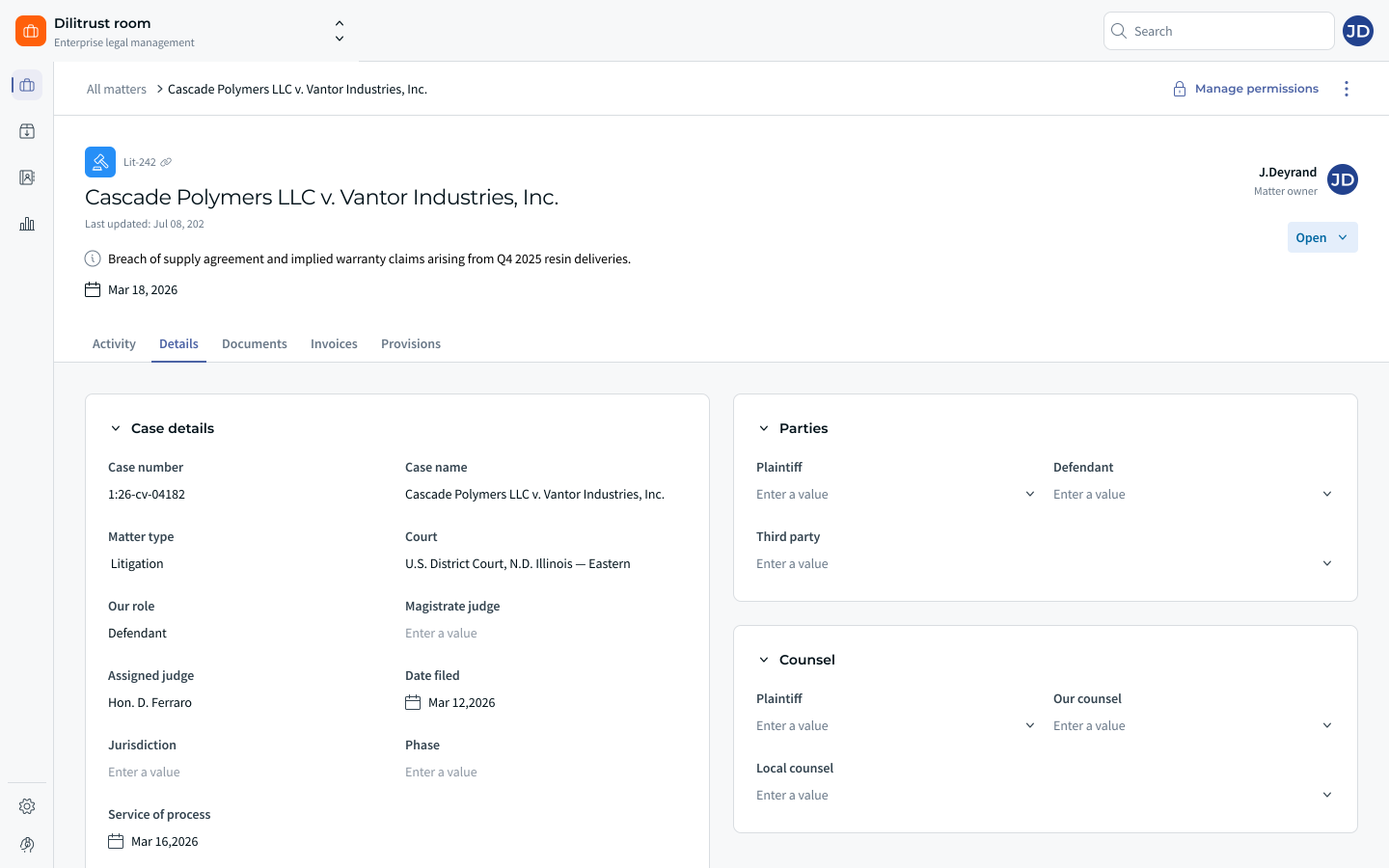
The MVP focused the product on one core value loop: incoming legal requests are reviewed, qualified and converted into structured Matters without losing their original context.
I led the product framing, MVP definition and core workflows with Product and Engineering, turning acquired Matter Management expertise into a suite-native product that could enter the US market, win new logos and expand across the existing customer base.
See how shared systems and accessibility turned repeated product work into leverage across the suite.
Explore the Design System caseEvery legal platform was adding review, drafting and search. I helped DiliTrust define a position it could credibly own: one AI experience that understands legal operations across contracts, entities, boards and matters.
The market was competing on document intelligence: review, drafting, search and clause analysis. Those capabilities were quickly becoming table stakes.
The opportunity was connected legal operations. DiliTrust already held the context across contracts, entities, boards and matters; the product challenge was turning that context into a coherent AI experience.
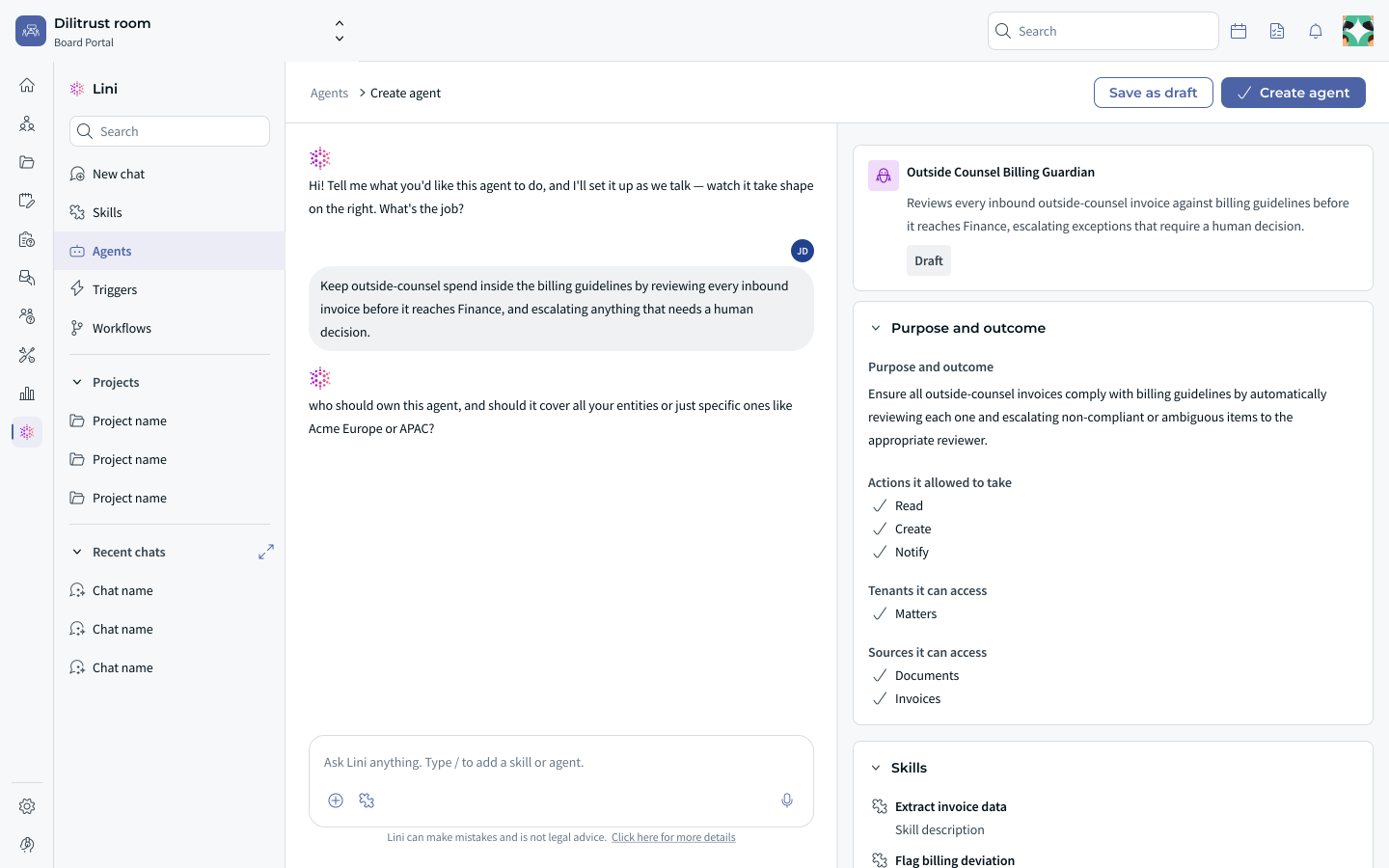
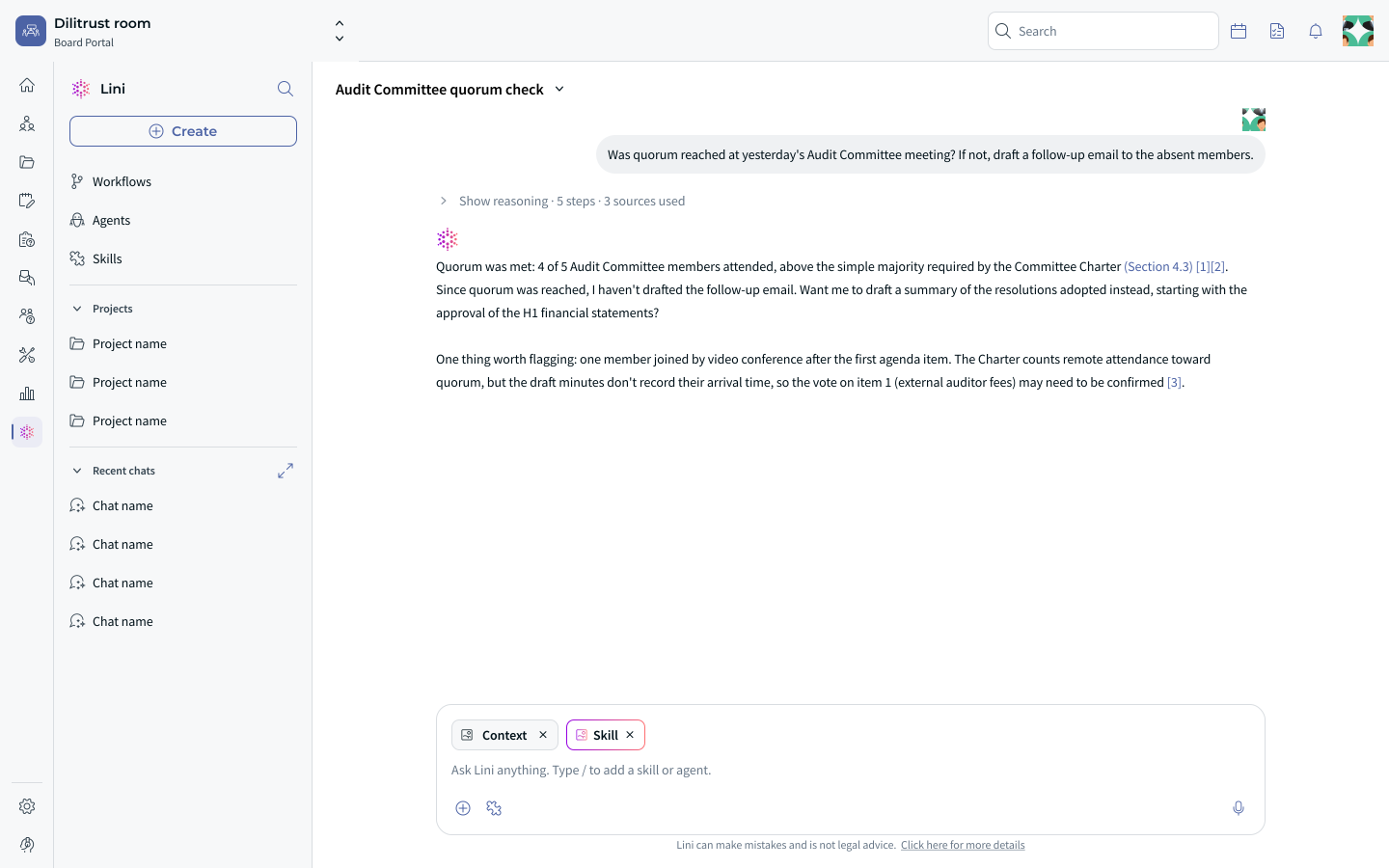
Lini connects legal data, workflows, agents and AI capabilities into one unified operational experience.
Instead of isolated assistants working on individual documents, Lini operates on connected legal operations across contracts, entities, boards and matters while keeping humans in control of every decision.
Contextual by default, expandable by intent.Lini starts from the active legal context and expands on demand.
One AI experience, multiple entry points.Users can access Lini from anywhere in the Legal Workspace while staying within the same conversational experience and context.
User-guided, traceable intelligence.Users remain in control of the capabilities being used, while every output remains traceable to the selected capability, sources and context.
Propose, don’t act.Actions are proposed as reviewable suggestions before execution. Impacts remain visible and controllable by the user.
Persistent context, continuous intelligence.Agents, instructions, workflows and historical context persist across the suite to deliver a continuous legal experience.
See how a focused MVP turned acquired expertise into a suite-native Matter Management product.
Explore the Matter caseAs DiliTrust grew through acquisitions, local UI patterns and front-end decisions multiplied. I treated the Design System as shared product infrastructure to reduce duplication and make integration repeatable.
Five products and acquired interfaces carried different interaction patterns, duplicated components and accessibility debt. Every new module made the suite harder to maintain and slowed delivery.
I treated the Design System as shared product infrastructure: one language that could move from foundational rules to production interfaces, while giving Product and Engineering a common way to scale.
Tokens, layout, type, colour and states.
Reusable, accessible building blocks.
Interaction models for complex workflows.
Shared interfaces shipped across the suite.
The Design System became visible in the products themselves: a shared datagrid model, then the same foundations carried into acquired products.
A before-and-after view of the shift from local implementations to a consistent, scalable enterprise table foundation.
The same patterns and tokens helped bring Pacta into the suite instead of adding a new UI system each time.
Rather than treating accessibility as a final audit, we embedded it in shared components, interaction patterns and delivery criteria. The Design System was validated against WCAG 2.2 by Access42, making the quality bar reusable across the suite.
I mapped fragmentation, defined the shared UX architecture and governance, and worked with Engineering on implementation. The result was a common foundation across five modules and 250,000+ users.
See how one AI-native product direction connected legal workflows, teams and business priorities.
Explore the AI direction caseI spent eight years working across client teams and product contexts before joining DiliTrust. The variety of those engagements shaped how I now approach enterprise SaaS, product strategy and design leadership.
Design Lead
Set design direction within a team of six to eight people. Ran planning and design reviews and led UX strategy across SaaS platforms and brand systems.
Senior UX Consultant
Worked across SaaS and e-commerce engagements, from discovery and pre-sales through client management and end-to-end delivery.
Founder · Independent practice
Founded and ran an independent design practice. Early work helped take products from concept to launch; later work was embedded in agency teams on larger SaaS engagements.
At DiliTrust, I applied that breadth to a multi-product legal suite: new revenue, shared systems, international acquisitions and product strategy.